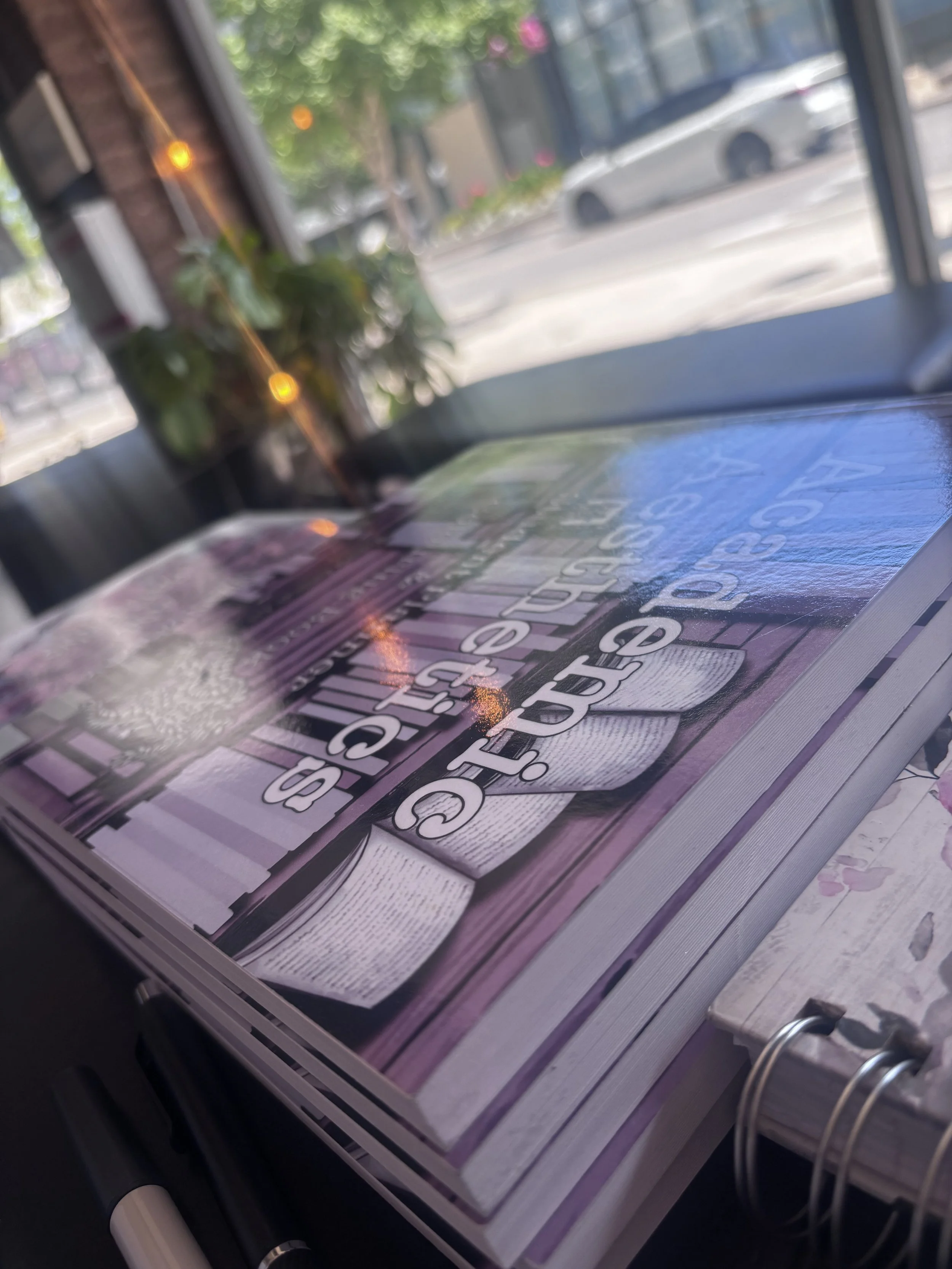
Academic Research & Workbooks
Featured Projects
-
Research Project & Workbook
“Translating marginalized practices of reciprocity into language that allows people to rebuild friendship and community in the midst of heightened individualism and late-stage capitalism.“
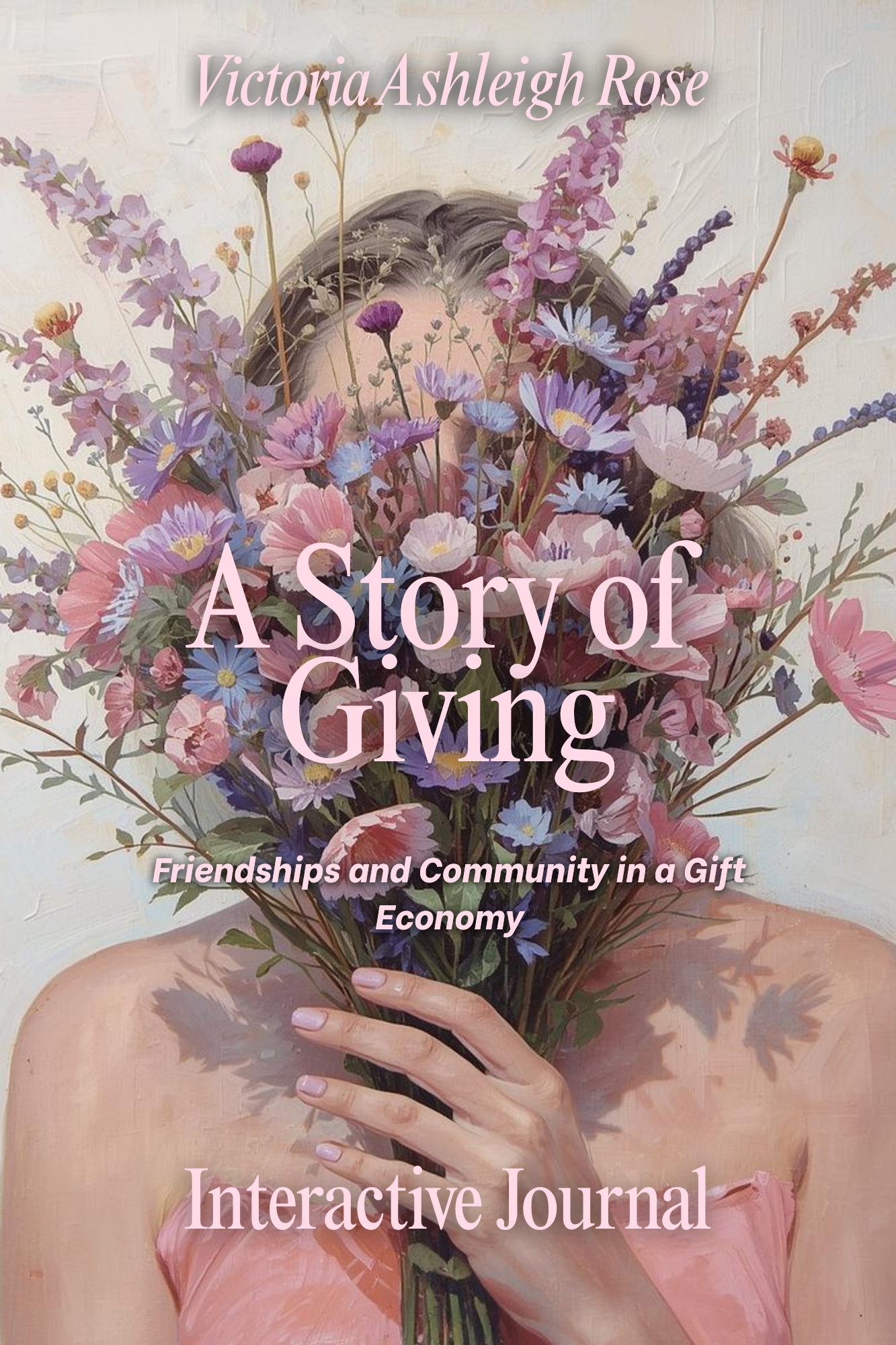
A Story of Giving is a reflective and action-oriented project that explores reciprocity as a foundational principle for relationships, community, and collective survival. Inspired by Robin Wall Kimmerer’s The Serviceberry: An Economy of Abundance, the project emerged from an academic inquiry that evolved into a deeply personal examination of values.
Drawing from Indigenous relational ethics, gift economy theory, feminist pedagogy, and community-based models of care, this project examines how reciprocity functions as a counterpractice to capitalist individualism. Sources such as Lewis Hyde, Marcel Mauss, Bell Hooks, Kyle Whyte, and contemporary justice-centred pedagogy inform an interdisciplinary framework that connects theory with lived social behaviour. A Story of Giving intends to ask readers to examine how individualism shapes friendships, intimacy, labor, and expectations of worth.
The workbook component aims to integrate reflection and action, encouraging readers to move beyond self-awareness into accountability and behavioral change. Through guided exercises, resource lists, and prompts, readers are invited to practice reciprocity intentionally, considering how they give, receive, and participate in shared responsibility within their communities.
While the project asserts that everyone needs this work, it does not assume readiness or ease. It acknowledges that shifting away from internalized individualism is emotionally and socially challenging, often uncomfortable, and difficult to market in a culture that rewards self-sufficiency. My project embraces this tension, positioning openness, humility, and sustained practice as necessary for meaningful change.
A Story of Giving ultimately argues that reciprocity is essential for relational health, community resilience, and survival. It invites readers into a slower, more connected way of being that prioritizes shared care over personal accumulation.
-
This project began as a class assignment and evolved into a passion project after encountering Robin Wall Kimmerer’s The Serviceberry: An Economy of Abundance (2020). That text proved to be life-changing, offering language for values I had long practiced but never fully articulated. It clarified an inherent commitment to reciprocity and relational responsibility, prompting deeper reflection on how gift-based thinking could meaningfully reshape friendships, relationships, and community life beyond transactional norms.
-
The project is both reflective and guided. It combines personal and collective inquiry with accessible, bite-sized methodologies that invite readers into sustained engagement without overwhelm. The workbook offers a gentle, accessible structure supported by curated resources, allowing readers to explore reciprocity at their own pace while remaining grounded in thoughtful guidance.
-
The workbook element integrates reflection and action, encouraging readers to move beyond intellectual agreement into accountability and behavioural change. Through guided exercises, prompts, and applied practices, readers are invited to examine how reciprocity can become an active, sustained lifestyle rather than just a moral ideal. The emphasis is on bringing reciprocal ethics into daily relationships, boundaries, and community participation.
-
The project draws from an interdisciplinary body of work that bridges theory, lived practice, and relational ethics. Foundational texts include Kimmerer’s The Serviceberry, Lewis Hyde’s The Gift, Marcel Mauss’s early anthropological work on gift exchange, Kyle Whyte’s writing on Indigenous ethics and relationality, bell hooks’s All About Love, contemporary health justice pedagogy, and Indigenous commentary such as Patty Krawec’s Aniin. With these sources, my goal is to ground the project in academic inquiry, Indigenous knowledge systems, nature-based ethics, therapeutic insight, and feminist theory.
-
A Story of Giving is inherently anticapitalist, as reciprocity and gift-giving function as counter-behaviours to capitalist logic. This project frames this position as a larger ideology ultimately tied to my own lived practice. It examines how capitalism shapes expectations of worth, exchange, and self-sufficiency, and how reciprocal relationships challenge extraction, competition, and individualism.
-
My project’s scope is intentionally universal. The assertion that everyone will need this book comes from my personal belief that reciprocity is essential for collective survival, socially, emotionally, and environmentally. I intend to position reciprocal care as a necessary condition for sustaining communities and ecosystems in the face of isolation and depletion. This project demands careful attention and intellectual generosity from both myself and the reader. Its emphasis on intersecting practices and open-minded engagement requires an intentional departure from internalized individualism, making it difficult to simplify or market. Rather than avoiding this challenge, the project embraces it, combining approachable guided journalling backed by interdisciplinary pedagogical frameworks.
A Story of Giving
Friendships and Community in a Gift Economy
-
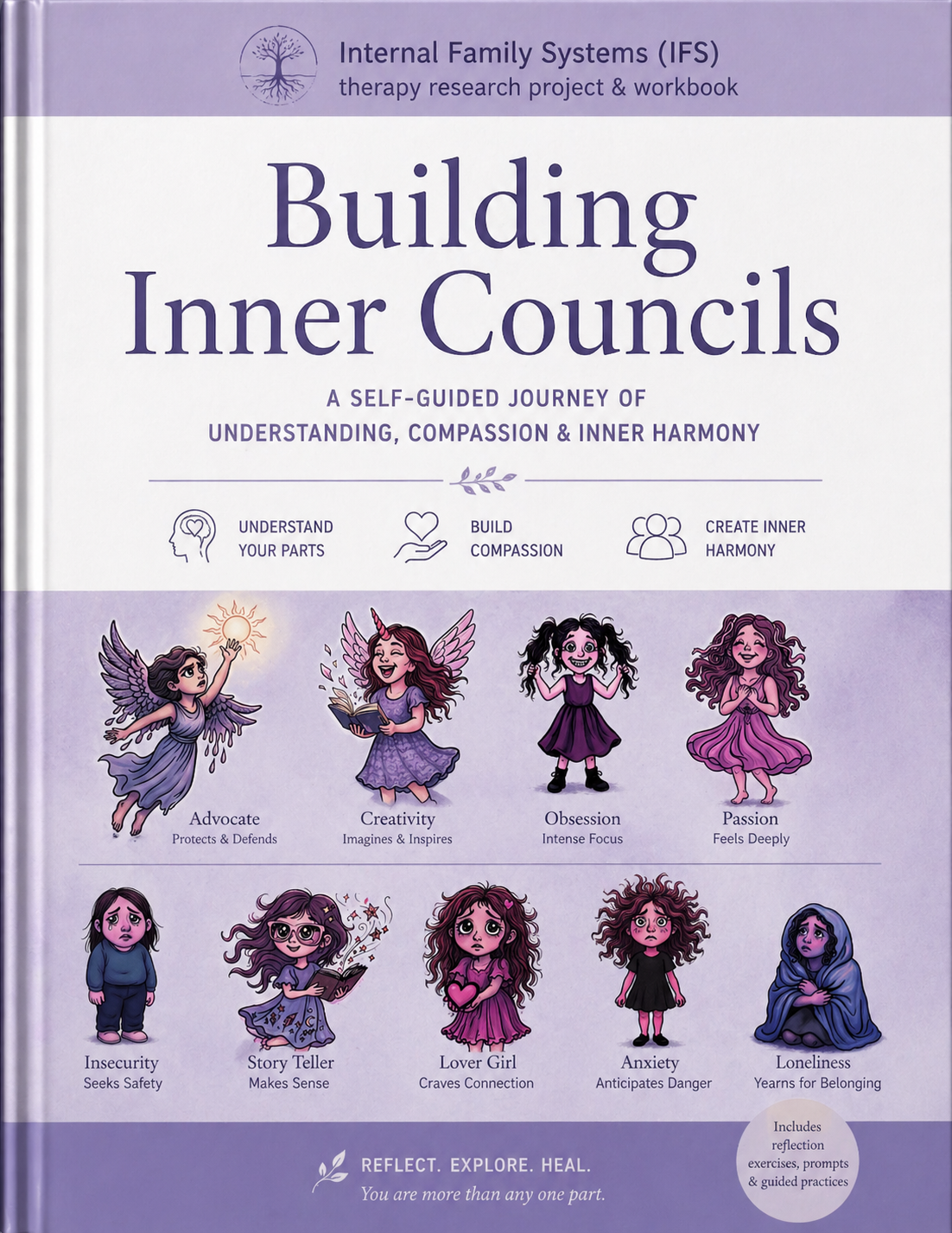
Building Inner Councils is a hybrid research and workbook project designed to make Internal Family Systems (IFS) therapy more accessible, flexible, and linguistically adaptable for general readers and mental health practitioners alike. While IFS, founded by Richard C. Schwartz (PhD), has gained traction as a powerful therapeutic model, its conceptual language and internal taxonomy can feel intimidating or rigid to those unfamiliar with clinical frameworks. This project responds to that gap by translating IFS concepts into approachable metaphors, guided reflections, and practical exercises that invite readers into self-directed exploration of their inner worlds, specifically drawing from a unique “Inner Councils” approach that has helped me.
Rooted in over fifteen years of lived experience in therapy as someone with OCD, ADHD, and a complex family upbringing, this project is grounded in long-term embodied engagement with mental health systems. Building Inner Councils reflects how IFS uniquely helped organize, articulate, and contextualize my internal experience in ways no previous modality had achieved. Rather than presenting IFS as a fixed system to be memorized, my workbook aims to encourage adaptability, personal interpretation, and creative engagement with one’s internal “parts.”
The workbook format is central to the project’s purpose. Through structured prompts, reflective exercises, and expanded metaphorical language, readers are invited to experiment with IFS concepts in ways that respect neurodivergence, trauma histories, and individual differences in cognition and emotional processing. The project intentionally softens clinical language without diluting conceptuality, making it suitable for both curious general readers seeking self-guided shadow work and practitioners interested in more flexible approaches to parts-based therapy.
A defining feature of the work is my open sharing of personal self-analysis and evaluative reflection. By modelling vulnerability and transparency, the project aims to demonstrate how IFS can function as a living, evolving every day practice rather than an intense prescriptive technique. My own reflective openness intends to reinforce the book’s central ethic: that internal understanding grows through curiosity, compassion, and dialogue rather than self-surveillance, ridicule or suppression. An ultimate guideline in IFS practice is that there are no bad parts, which my project fully embodies.
Ultimately, Building Inner Councils aims to contribute to the broader normalization and popularization of IFS within both therapeutic spaces and mainstream self-help culture. It positions internal multiplicity as a natural and navigable feature of human psychology, offering readers language and tools to build more compassionate relationships with themselves.
-
The primary aim of this project is to make Internal Family Systems therapy more accessible for everyday readers and at-home shadow work. Many people are drawn to IFS conceptually but feel intimidated by its structured language, terminology, or clinical framing. This workbook seeks to lower that barrier by translating core ideas into more flexible, intuitive, and human-centered language, allowing readers to engage with the model without feeling constrained by rigid definitions.
This project is written for two overlapping audiences: general readers who are curious about Internal Family Systems (IFS) therapy and are seeking an approachable, self-guided introduction, and mental health practitioners who are interested in expanding how they conceptualize and apply IFS with clients. Rather than privileging clinical insiders alone, the work intentionally invites people outside formal therapeutic spaces to engage meaningfully with parts-based work, while still offering depth and adaptability valuable to professionals.
-
This project is grounded in extensive lived experience. After more than fifteen years in therapy as someone with OCD, ADHD, and a complex family background, IFS was the first modality that allowed me to meaningfully organize, communicate with, and understand my internal world. Where other approaches felt fragmented or inaccessible, IFS provided a coherent framework for recognizing internal multiplicity without pathologizing it. This long-term engagement informs both the structure and ethos of the book.
-
As an English and Humanities undergraduate, I presently lack the pedagogical training to approach this subject as a scientific study with the same depth of insight, education, or clinical experience as the modality’s founder, Richard C. Schwartz (PhD) or IFS certified therapeutic practitioners. My engagement with Internal Family Systems (IFS) is grounded in over 2 years of sustained personal practice, alongside an in-depth study of foundational texts by Richard C. Schwartz (PhD), including Introduction to Internal Family Systems, Internal Family Systems Therapy: Second Edition, No Bad Parts, and You Are the One You’ve Been Waiting For.
This project remains faithful to this material and the foundational principles of IFS while incorporating ongoing consultation with licensed therapists and peer review to ensure conceptual integrity.
this project approaches the modality through an interdisciplinary lens that draws on personal narrative, reflective methodology, and lived experience. In doing so, it aims to translate core IFS principles into more accessible, interpretive frameworks that may resonate with non-clinical audiences. this work treats it as a site of critical inquiry, using experience to explore how IFS concepts can be understood, articulated, and meaningfully adapted outside strictly therapeutic settings. It is my passionate belief that my unique take on IFS practice has the potential to expand its accessibility and applicability in ways that may help popularize the core modality.
In parallel with the development of this work, I am pursuing formal training through the IFS Institute (formerly the Center for Self Leadership) or an equivalent, with the goal of completing Level 1 certification or higher prior to finalizing the project. I also plan to undertake life coaching certification and trauma-informed training as part of a broader, structured pathway toward ethical engagement in mental health-related work. Through this combined academic, experiential, and professional development approach, the project seeks to responsibly bridge established therapeutic frameworks with more publicly accessible forms of understanding.
-
The project is intentionally hybrid in form, balancing accessibility for casual readers with conceptual depth for practitioners. While it engages theory, its primary focus is experiential and workbook-based application. Readers are encouraged to learn through reflection, experimentation, and dialogue with their inner systems. The book incorporates open personal self-analysis and evaluative reflection as a method of demonstration. By sharing my own internal work transparently, I model how the approach functions in real time, including its challenges and limitations. This openness is meant to demystify the process and reinforce that IFS is an ongoing relational practice with oneself.
Ultimately, Building Inner Councils aims to support the broader popularization of IFS within both therapeutic and mainstream self-help spaces. By making the model more approachable without diluting its depth, the project hopes to contribute to a cultural shift toward greater internal compassion, curiosity, and psychological literacy.
Building Inner Councils
IFS Therapy Research Project & Workbook
-
“Systems that work in practice are dismissed because they don’t fit dominant epistemologies—especially when women, queer people, or intuition are involved.”
Is astrology merely an unfalsifiable belief system, or an overlooked framework for understanding human behavior, time, and pattern?
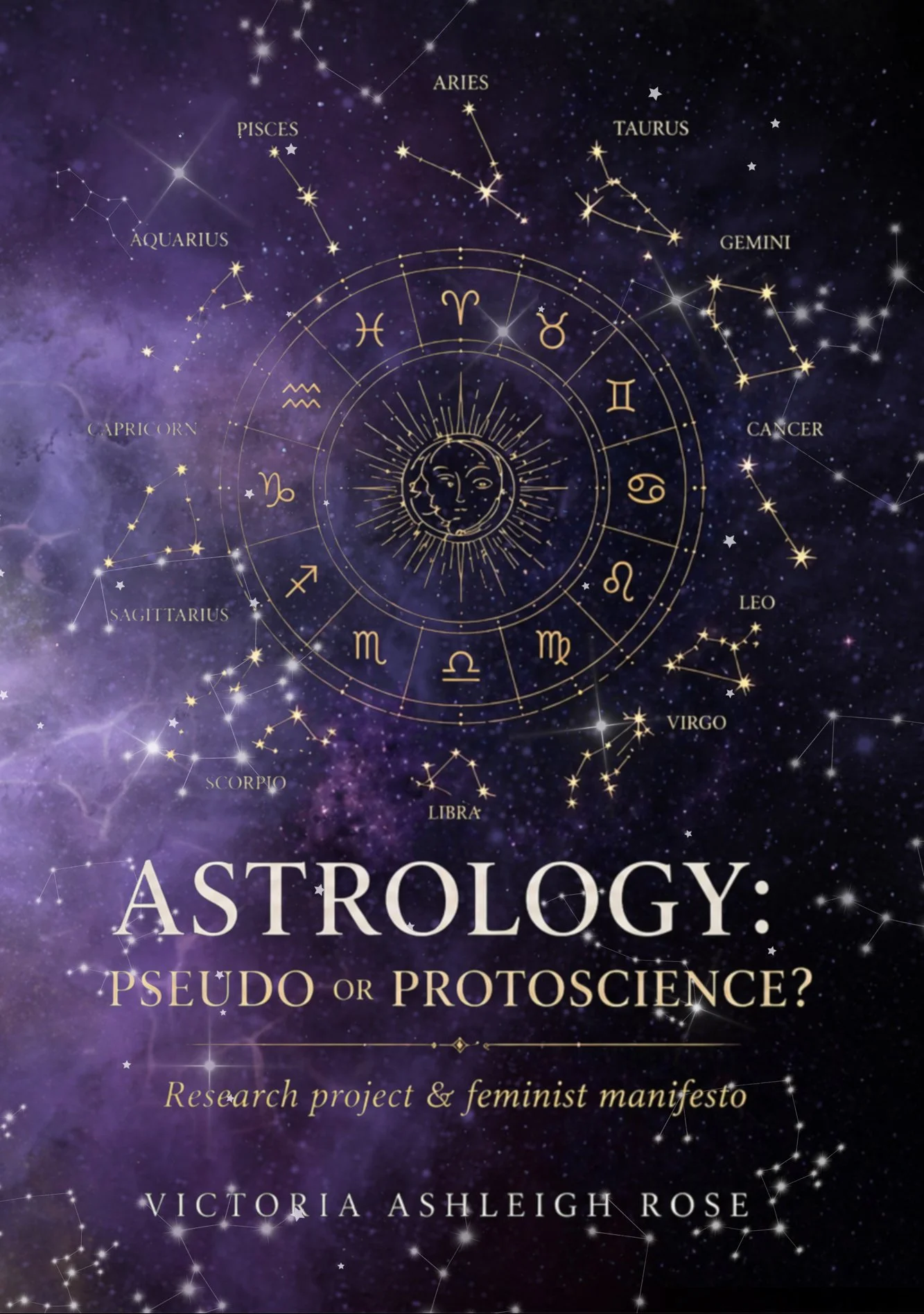
In Astrology: Pseudo or Protoscience?, Victoria Ashleigh Rose undertakes a bold interdisciplinary investigation into the foundations of astrological thought. Through the lenses of science, history, philosophy, and feminism, this work challenges the reflexive dismissal of astrology as pseudoscience and instead examines its potential as a protoscientific system rooted in observation, symbolic logic, and centuries of accumulated knowledge.
Blending rigorous research with personal reflection, this book reopens a conversation often shut down too quickly: What qualifies as “real” knowledge? Who decides? And what forms of understanding have been historically discredited, marginalized, or misunderstood?
-
Astrology: Pseudo or Protoscience? is an interdisciplinary research project and feminist manifesto that challenges the dismissal of astrology as mere superstition, arguing instead for its reconsideration as a protoscience: an early, observational system that may record real phenomena not yet adequately understood by contemporary scientific frameworks. Rather than asking readers to “believe” in astrology, my project interrogates why astrology persists across cultures and centuries despite sustained skepticism, ridicule, and institutional discrediting.
The project situates astrology within historical, sociological, feminist, and philosophical contexts, tracing how its marginalization is intertwined with misogyny, homophobia, religious authority, and the policing of intuitive or relational ways of knowing. Astrology’s close association with women, queer communities, and practices labeled as “witchcraft” is examined as central to understanding why it has been excluded from serious inquiry.
Drawing from psychology, history of science, sociology, and emerging questions around pattern recognition and data modeling, the project critiques the methodological limitations of prior scientific studies that sought to “debunk” astrology using narrow or unproductive approaches. It argues that dismissal without rigorous, open-ended investigation reflects social prejudice more than epistemic certainty.
Written for readers of all intellectual backgrounds, my work prioritizes theory, analysis, and argumentation, making it accessible for anyone curious about why so many blindly believe in astrology and why so many full-heartedly dismiss it. The manifesto component articulates my argument on the cultural stakes of astrology’s survival, asking what needs astrology fulfills in a disenchanted, hyper-rational world and why people continue to find uncanny resonance in its symbolic language.
What if astrology is recording something real, but we lack the conceptual tools to recognize it? By reframing astrology as humanity’s earliest—and thus longest surviving—form of scientific observation rather than a faulty belief system, Astrology: Pseudo or Protoscience? invites readers to reconsider how knowledge is legitimized, who gets to define credibility, and what kinds of inquiry are dismissed.
-
This project begins from the premise that astrology, while commonly treated as a pseudoscience, warrants reconsideration as a protoscience due to its longevity, cultural prevalence, and historical role in early scientific inquiry. The work argues that astrology’s dismissal cannot be fully understood without examining the social forces that shaped it, including misogyny, homophobia, and religious authority, rather than assuming its invalidity is purely empirical.
What if astrology is recording real phenomena, but we lack the conceptual tools to recognize or study them effectively? By situating astrology as humanity’s earliest scientific system—much like early medicinal practices later validated by science—my project offers language and theory for believers who intuit meaning in astrology but struggle to articulate why, while encouraging skeptics to reconsider the rhetoric around astrology’s named illegitimacy.
My goal with this project is not to assert astrology’s scientific validity outright, but to complicate its dismissal and advocate for more rigorous, less prejudiced inquiry. By questioning why astrology has been excluded from serious investigation, the work opens space for alternative forms of analysis and future research that move beyond debunking as an endpoint.
-
The analysis draws from multiple disciplines, including psychology, sociology, history of science, philosophy, feminism, and cultural studies. My project addresses astrology as a complex social phenomenon that intersects with identity, belief, power, and meaning-making across time.
Astrology’s strong association with women, queer communities, and practices historically labeled as witchcraft, illuminate why astrology has been socially trivialized and ridiculed, even as it continues to function as a meaningful interpretive system for marginalized groups navigating identity, trauma, and belonging.